
Health Inspires
  • Home
    • About
    • Our Approach
  • Private Coaching
  • Podcast
    • Podcast Biographies
  • Recipes/Resources
    • Recipes
    • Healthy Fast Food Tips
    • Well-Stocked Pantry and Fridge
    • Inspiring Links and BMI Calculator
    • Diet and Nutrition Tips
  • Blog
  • Contact
  • Home
    • About
    • Our Approach
  • Private Coaching
  • Podcast
    • Podcast Biographies
  • Recipes/Resources
    • Recipes
    • Healthy Fast Food Tips
    • Well-Stocked Pantry and Fridge
    • Inspiring Links and BMI Calculator
    • Diet and Nutrition Tips
  • Blog
  • Contact

Yogurt Trickery

9/20/2014

1 Comment

 
Picture
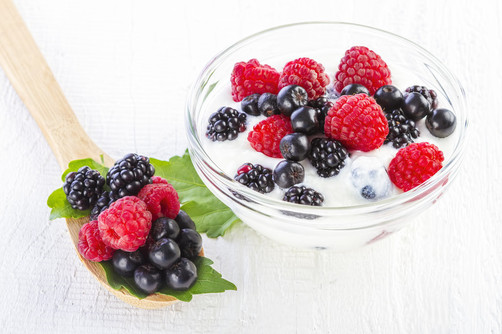
As part of the mad dash to solve “what's for dinner”, and oh by the way, “we need milk”; I run to Whole Foods to pick up 4 items 1) Milk 2) Chobani yogurt 3) Fruit 4) Rotisserie Chicken (sound familiar?)  Hmmm….there is no Chobani yogurt at (this) Whole Foods.  

At that point, I am looking for another yogurt option to replace my typical 6 oz - 4 pack Chobani blueberry yogurt purchase.  (My default is Chobani based on a few considerations such as 1) The taste and texture is good 2) It does not have much added sugar by comparison 3) My kids like it and will eat it.)

I am selecting based on price and value, and so I compromise.  With all yogurts considered and based on my criteria, I decide on the more reasonably priced Stoneyfield Greek style yogurt, vanilla flavored, 0% fat in the 16 oz. container.  I thought I could spoon that on top of my fruit in the morning and add it to smoothies for my kids.  I also thought that a change will taste good.

Allow me to back up and set the stage:
  • I typically read EVERY ingredient panel, and specifically, I read my yogurt ingredient panel to avoid buying added sugars, artifical sweeteners (includes Stevia, in my world), and added colors  
  • I give grocery store tours for goodness sake!  I give “how to shop the supermarket” presentations, what to look for, what foods and ingredients to avoid, food science and food confusion, super foods  and also share that grocery stores are ultimately in the business of selling foods, the more the better I might add (financial strength), and our government is knee deep in politics as it could possibly be
  • Having said all of that, I didn’t read the ingredients!  I settled based on value, price and I compromised.  My mistake

Fast forward, I open the container the next morning.  I look at the label and ingredients to see what they list as a serving size, how much protein, how many calories and there it is!  Boom! SUGAR!  So much added sugar!  So disappointing.  The serving size of 1 cup, more than I would eat on top of fruit anyway, is 200 calories packed with 28 grams of sugar.  What a bummer.  I expect sugar in the obvious treats such as ice cream, and not in my healthier foods.  Not a good choice for yogurt.


What you can do:
  1. Know what you are eating.
  2. Read ingredient panels and labels.
  3. Better yet, limit buying foods that have a label! 
  4. Know that 4.5 grams of sugar equals 1 tsp. of sugar.
  5. Stoneyfield is owned by Dannon, and Dannon manufactures many yogurts, including the desert kind marketed as healthy for kids such as Danimals.
  6. Know that the US market has plenty of room for growth in yogurt sales, and you will see more and more yogurt marketing- as yogurt manufacturers target you to buy their brand.
  7. Choose wisely and don’t believe everything you hear or read.
  8. Real yogurt, less sugar the better, is good for you…  
  9. …and so are many other foods.  Realize that ONE food, no matter what it is, will not make or break you.  I have shared this thought so much, that my kids use this one on me.  My playful message that “broccoli will save your life!” has been weakened!
  10. Food manufacturers want to sell you more food-buyer beware.
  11. Our government tells us to eat more of this and eat more of that.  Why?  Can you imagine the backlash from our dairy council and our beef council if the message were to “eat less”?  That is why.  Honestly- most of us could eat less food than we currently do, and it needs to be in the right portions and with the right choices (plant based) most of the time.

In closing, when buying yogurt, the very best choice would be plain yogurt.  With plain yogurt you can add your own honey or fruit to sweeten to your taste.  However, yogurt doesn’t need to be sweet.  It can be used in place of sour cream, or in recipes that include colorful vegetables.  Brands such as Frage have two compartments; one side is plain yogurt, and the other side has sweetened fruit or honey.   You can add the sweet to the plain, and try out your taste.  Your goal is the less sugar the better. 

Health Inspires.


1 Comment
Sneaky Sugar

6/25/2014

0 Comments

 
Picture
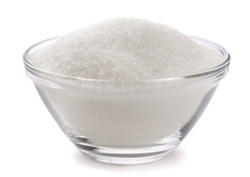
I heard a Pepsi commercial this week on the radio.  The marketing hook was Pepsi with “real sugar”.  I was afraid of this.  With the hype and awareness around high fructose corn syrup, manufacturers are now using sugar (cane sugar/sucrose) again and promoting it as a good thing.  HFCS, is a liquid sweetener, easy and less expensive for manufacturers to use in their sweetened beverages and processed foods.  It seems we are switching back to sugar in many products.  Although I would agree that cane sugar is the lesser evil; added sugar is added sugar and the the real message stays the same…LIMIT YOUR INTAKE OF ALL ADDED SUGARS.

For informational purposes only, I wanted to share a description of many sugars on the market today.  Some may be better choices than others as some may be a more natural sugar, less processed or contain trace minerals.  However, keep in mind that you are not consuming sugar for nutritional value.  

THESE ARE ADDED SUGARS.  Consider the better argument that because some sweeteners are sweeter than others, you might use less of it…and that is a good thing.  They also may wreak less havoc on your blood sugar as well.  My overarching advice is to limit sugar and know how much you are consuming.  

Types of Sugar:
  • Turbinado sugar is made with larger crystals and is made at an earlier period in the sugar cane processing method. It retains some of the flavor of molasses, a natural byproduct of the sugar process.  It has 11 calories per teaspoons compared to the 16 in table sugar.  Some of you may recognize this sugar by the name “Sugar in the Raw.” 
  • Agave is a liquid natural sweetener extracted from the core of the Agave plant. This is a sweet mild nectar and is a multi-purpose sweetener.  It can be used as a one-for-one replacement for sugar, then adjust to your own personal taste. This has about 20 calories per teaspoons but some say it is a little sweeter than sugar so you can use less.  This is a little pricey.
  • Honey is more natural for one example.  Honey is sweeter by comparison to granulated sugar (table sugar) so you do not need to use as much honey as you would the granulated variation.  Honey has vitamins and minerals.
  • Why maple syrup?  It is from a tree…NATURAL.  Pure maple syrup has health benefits because it has vitamins and minerals as well as amino acids (building blocks of protein).   It can also be pricey.
  • Brown sugars are processed to varying degrees.  Molasses is added back into it, and therefore it contains some trace minerals.  Keep in mind these sugars are not consumed for their nutritional values.  They are still considered sweeteners and should be used sparingly.  They are the healthier whole food options to the other processed sweeteners in the market.  
  • Brown Rice Syrup is considered one of the healthy sweeteners in the natural food industry made from brown rice. You will find it in some of the healthier granola bars and cereals.  You can use it as a sweetener at home and in baking.  
  • What about fructose or fruit sugar?  Yes, sugar from the actual fruit sounds right.  However, in commercial use, it is sometimes derived from sugar cane or sugar beets.  Fructose is sweeter than many sugars.  If we are talking about eating a piece of fruit, then munch on and read my blog from last week http://www.healthinspires.com/blog/have-your-fruit-and-eat-it-too .
  • Artificial: AVOID.  Saccharin (Sweet’n Low), Aspartame (Equal), Sucralose (Splenda), Stevia…Many, if not all of these sweeteners have various degrees of cancer causing proof in lab animals (rats) and in studies lately, have been related to an increased risk of excessive weight gain, metabolic syndrome , cardiovascular disease and type 2 diabetes.  Why?  The premise is that your hormones and your brain response is altered with these sweeteners and therefore you never get the reward of feeling satisfied.  At the very least, can we agree that this stuff is chemically made?  Many people have turned to Stevia because it comes from a plant and it has no calories and is marketed as the “natural sweetener”.  I am weirded out by that as well, for no other reason than it comes in a package.  A plant in a package?  Consider what chemicals were used to package and process it into its powdery form.  I lump it in with that no reward brain theory as well.  Plant or not, it comes in a package from a food manufacturer.  For the record and to play devil’s advocate, cane sugar and beet sugar (“real” processed sugars) actually contribute to these diseases more than artifical sugars…which brings me back to my mantra…
  • LIMIT ALL ADDED SUGARS.


Health Inspires.

0 Comments
    Health Inspires
    Kathryn Scoblick

    Kathryn Scoblick

    My passion and purpose is helping people reach their full potential and master their wellbeing. 


    Categories

    All
    31 Days In July
    Accountability
    Action Items
    Daily Victories
    Healthy Fast Food
    Marketing
    Resolutions
    Setting Goals


    Archives

    February 2021
    March 2020
    January 2020
    December 2019
    October 2019
    August 2019
    February 2019
    December 2018
    January 2018
    December 2017
    November 2017
    October 2017
    August 2017
    July 2017
    June 2017
    May 2017
    February 2017
    December 2016
    November 2016
    August 2016
    April 2016
    March 2016
    February 2016
    January 2016
    November 2015
    October 2015
    July 2015
    March 2015
    February 2015
    January 2015
    November 2014
    September 2014
    July 2014
    June 2014
    May 2014
    April 2014
    March 2014
    February 2014
    January 2014
    December 2013
    November 2013
    October 2013
    September 2013
    August 2013
    July 2013
    June 2013
    May 2013
    April 2013
    March 2013
    February 2013


    RSS Feed

Picture
Disclosure:  Always consult with your physician or other qualified health care provider before beginning any diet or exercise program and ask whether you are healthy enough to engage in a diet and exercise program. Never disregard, avoid or delay in obtaining medical advice from your doctor or other qualified health care provider concerning your overall health and wellness, including your physical, mental and emotional wellbeing. If you have or suspect that you have a medical problem or condition, please contact a qualified health care professional immediately.  It is your choice to follow the suggestions, opinions and advice given by a Health Inspires wellness coach.